
The greatest pep talk in art history
Plus, an important announcement about Worm Zoom

Welcome to the 186th issue of Subtle Maneuvers. Today, after 458 mornings hosting Worm Zoom, I’m announcing some changes to my virtual coworking club starting in June. But first: a magnificent artist-to-artist pep talk that I never tire of reading.
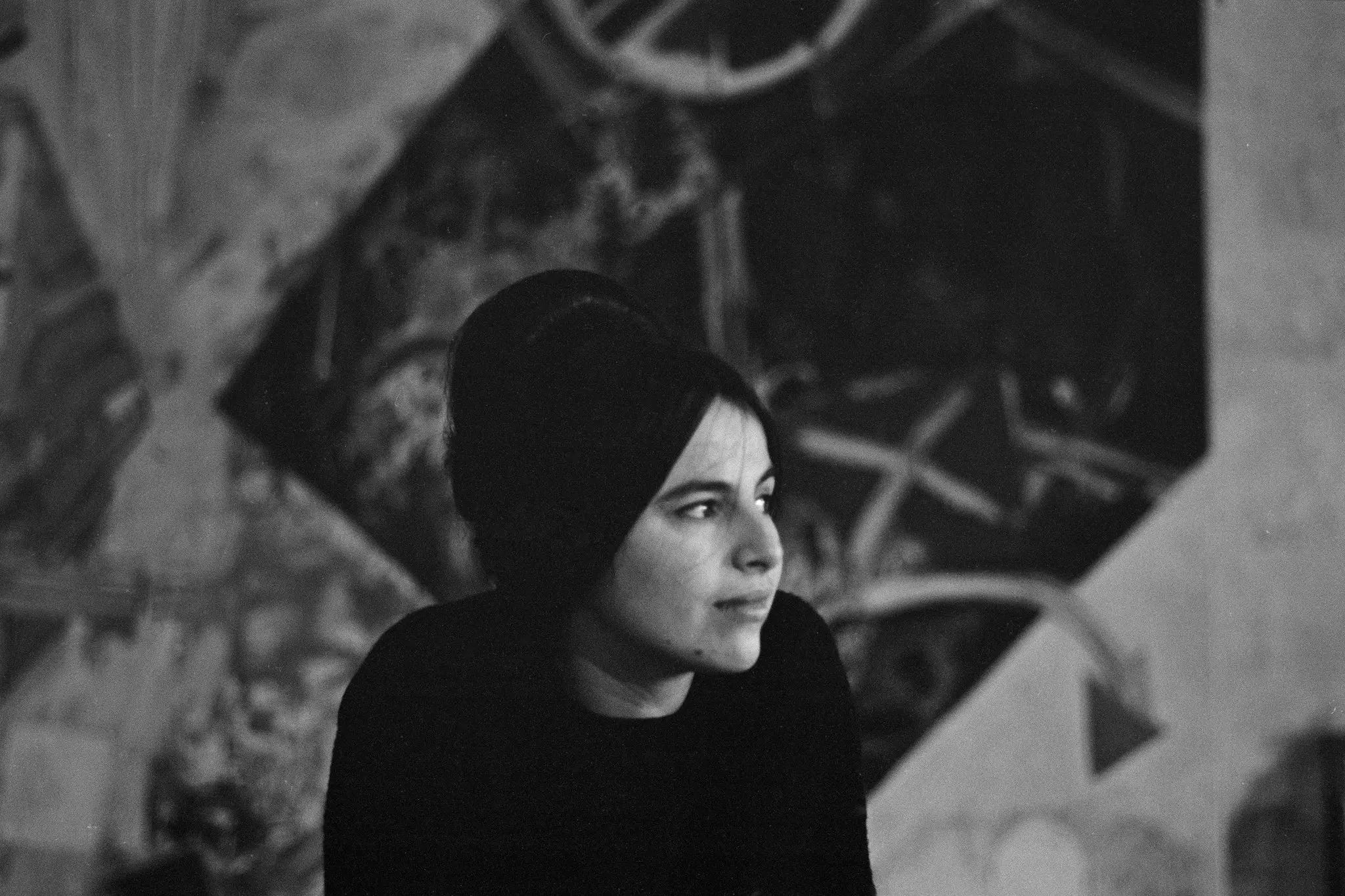
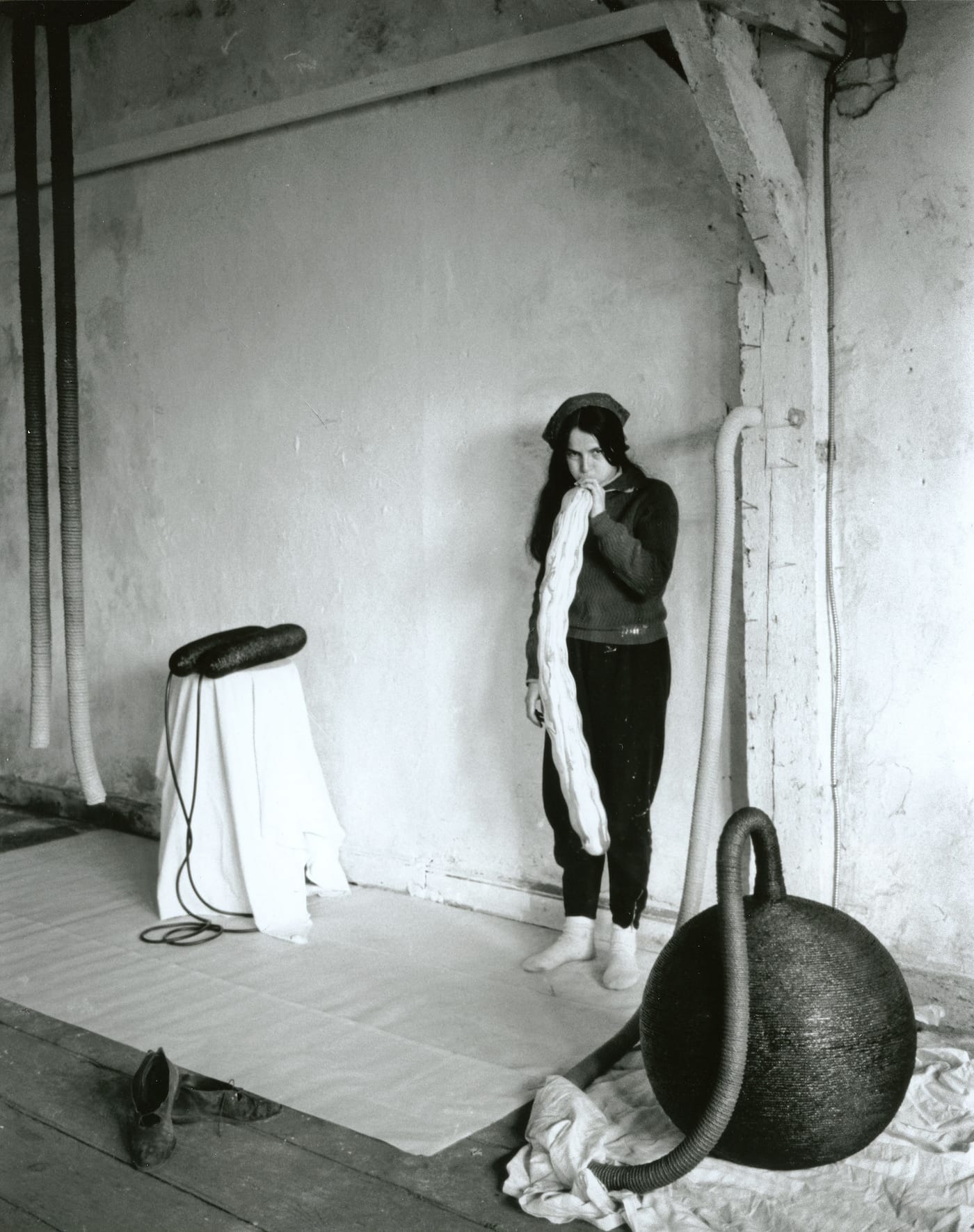
In March 1965, the German-born American sculptor Eva Hesse wrote a letter to her friend and fellow artist Sol LeWitt, venting her doubts about her work and asking for advice.
Hesse had recently turned twenty-nine. She had met LeWitt five years earlier, in the summer of 1960, not long after receiving her B.F.A. from the Yale School of Art and Architecture. LeWitt was eight years her senior, and a mentor figure for the perpetually self-doubting Hesse, who in 1965 had reached a painful crossroads: After devoting years to drawing and painting, she was beginning to experiment with sculpture—but she felt unsure about the value of what she was doing and whether or how to keep going.
“So I sit now after two days of working on a dumb thing which is three-dimensional,” Hesse wrote to LeWitt. She continued:
Actually looks like breast and penis—but that’s ok and I should go on with it maybe . . . but I don’t know where I belong so I give up again. All the time is like that. . . . Have really been discovering my weird humor and making sick or maybe cool but I can only see things that way—experience them also but I can’t feel cool—that is my hopelessness. Like it all is based on fear and cannot be cool when one constantly feels fear. . . . Everything for me personally is glossed with anxiety. . . . How do you believe in something deeply? How is it one can pinpoint beliefs into a singular purpose?
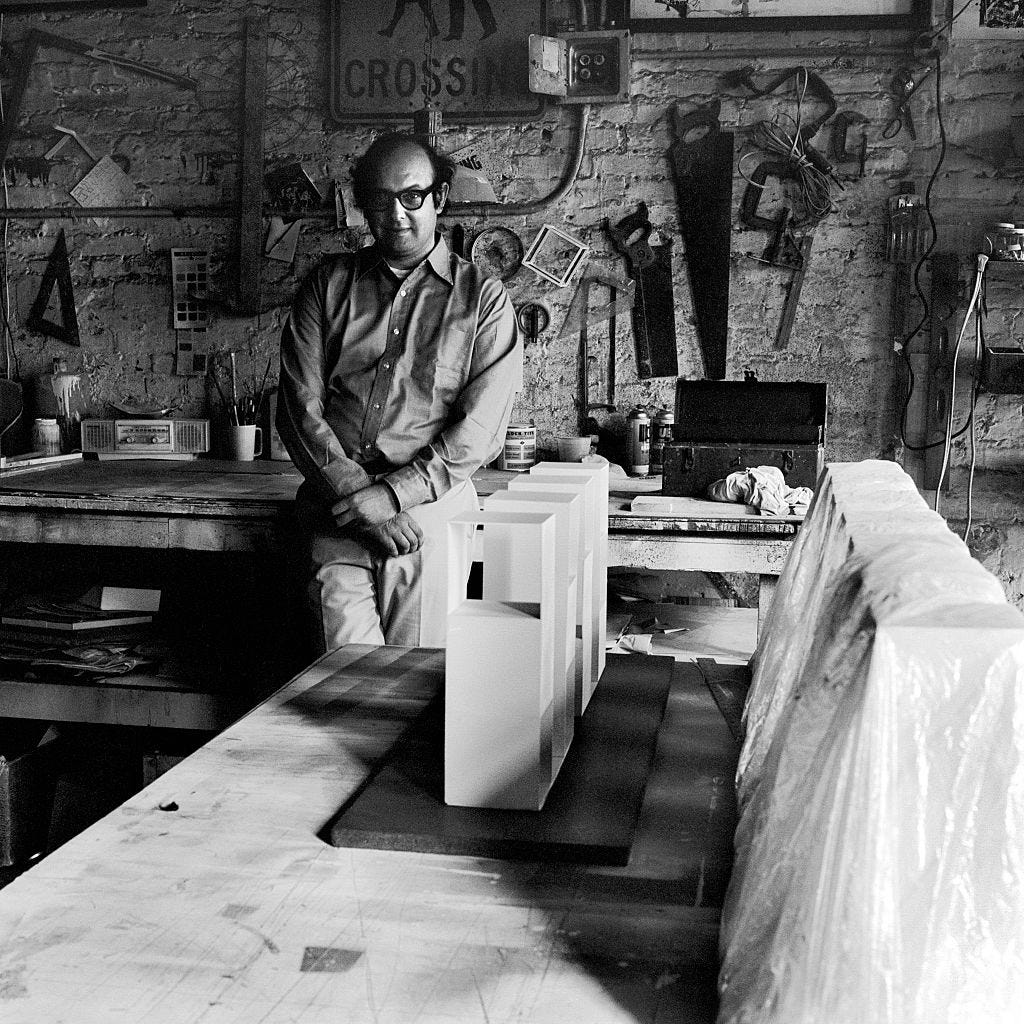
In reply, LeWitt wrote what must be the greatest and wisest pep talk in all of art history, which has circulated on the internet for years but which I’ve somehow never shared in this newsletter—and which felt particularly appropriate for this graduation season, a time of so much well-meaning advice of dubious real-world utility. LeWitt’s letter is different. Here it is, with a transcript below each page:
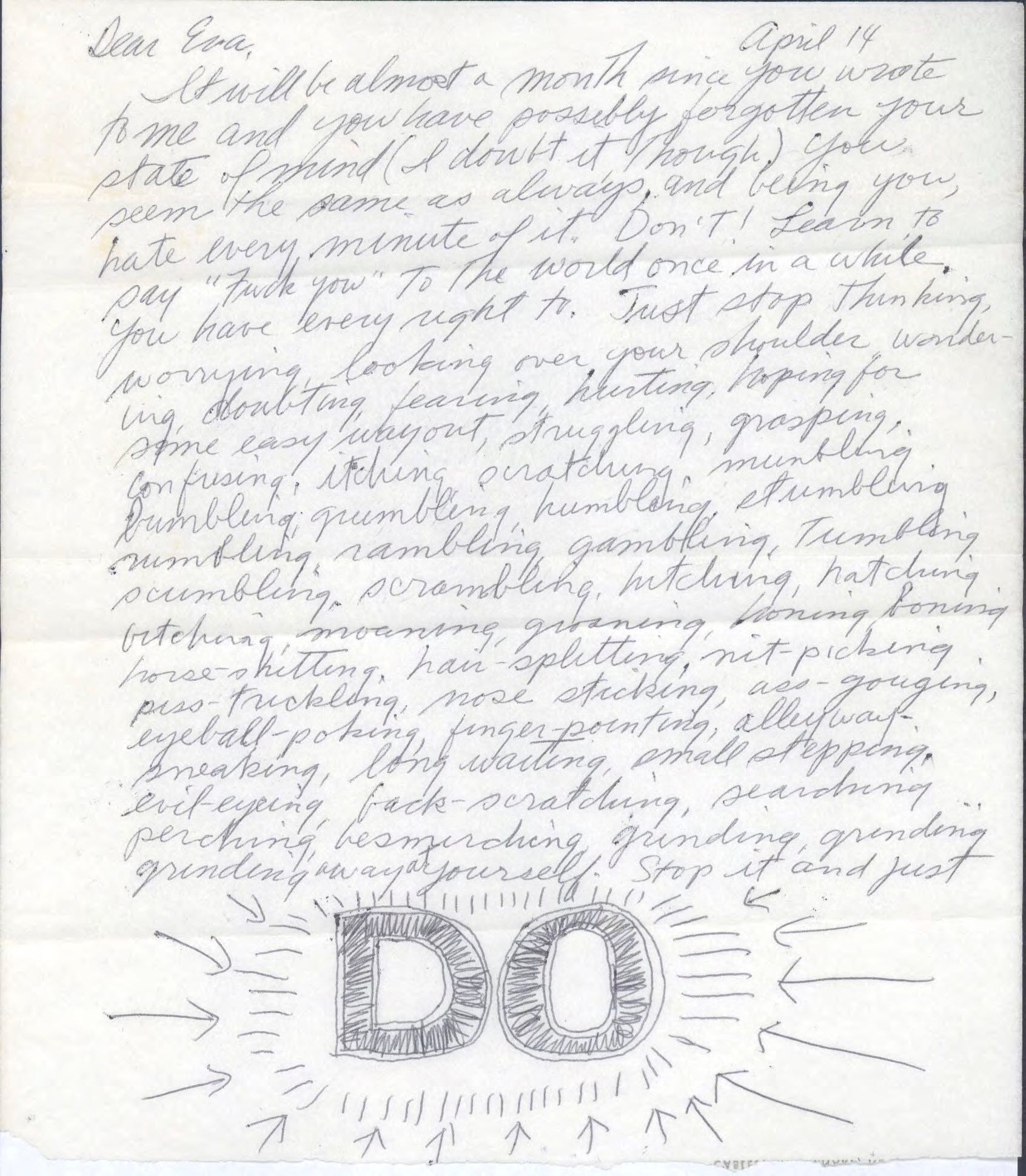
Dear Eva,
It will be almost a month since you wrote to me and you have possibly forgotten your state of mind (I doubt it, though). You seem the same as always, and being you, hate every minute of it. Don’t! Learn to say “Fuck you” to the world once in a while. You have every right to. Just stop thinking, worrying, looking over your shoulder, wondering, doubting, learning, hunting, hoping for some easy way out, struggling, grasping, confusing, itching, scratching, mumbling, bumbling, grumbling, humbling, stumbling, rumbling, rambling, gambling, tumbling, scumbling, scrambling, hitching, hatching, bitching, moaning, groaning, honing, boning, horse-shitting, hair-splitting, ass-gouging, eyeball-poking, finger-pointing, alleyway-sneaking, long waiting, small stepping, evil-eyeing, back-scratching, searching, perching, besmirching, grinding, grinding, grinding away at yourself. Stop it and just DO.
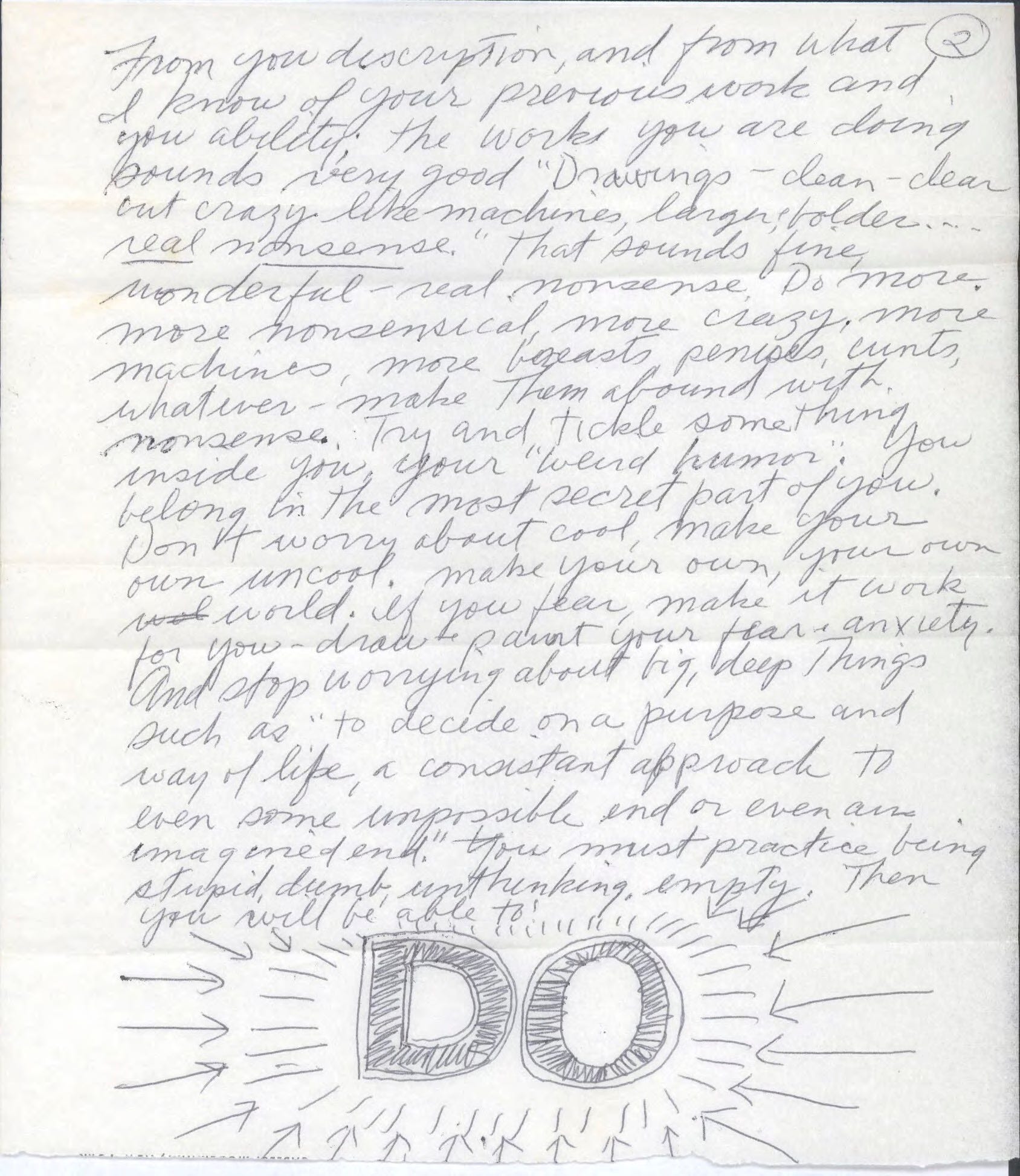
From your description, and from what I know of your previous work and your ability, the work you are doing sounds very good. “Drawings—clean-clear but crazy like machines, larger, bolder, real nonsense.” That sounds fine, wonderful—real nonsense. Do more. More nonsensical, more crazy, more machines, more breasts, penises, cunts, whatever—make them abound with nonsense. Try and tickle something inside you, your “weird humor.” You belong in the most secret part of you. Don’t worry about cool, make your own uncool. Make your own, your own world. If you fear, make it work for you—draw and paint your fear and anxiety. And stop worrying about big, deep things such as “to decide on a purpose and way of life, a consistent approach to even some impossible end or even an imagined end.” You must practice being stupid, dumb, unthinking, empty. Then you will be able to DO.
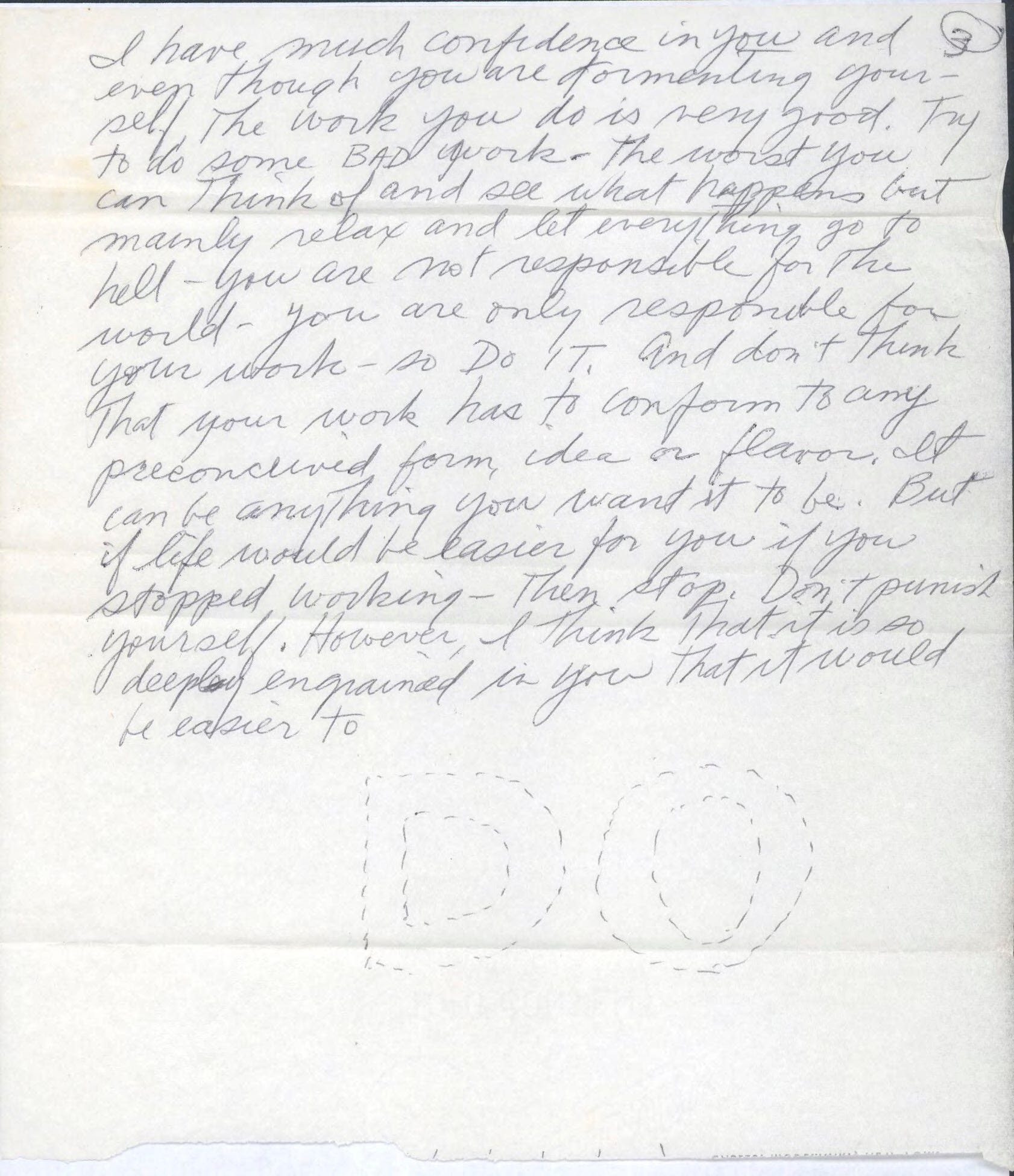
I have much confidence in you and even though you are tormenting yourself, the work you do is very good. Try to do some BAD work—the worst you can think of and see what happens but mainly relax and let everything go to hell—you are not responsible for the world—you are only responsible for your work—so DO IT. And don’t think that your work has to conform to any preconceived form, idea or flavor. It can be anything you want it to be. But if life would be easier for you if you stopped working—then stop. Don’t punish yourself. However, I think that it is so deeply engrained in you that it would be easier to DO.
The letter continues for two more pages, which you can read here—but the heart of it is in the above passages, with their forceful, funny, empathetic, energetic call for Hesse to set her doubts and worries aside and DO THE WORK. What other advice is there, really, at the end of the day? But sometimes you need to be reminded of it in a way that makes you feel it, and I think that’s what makes LeWitt’s letter so special: the feeling of being seized by the shoulders and shaken to attention, by someone who believes in you and wants to see you succeed.
Hesse’s diaries have been published, and as far as I can tell there is no mention in them of LeWitt’s letter and her feelings about it. But according to Lucy Lippard’s excellent biography of Hesse, “this seems to have been the time when she buckled down to work and began to realize that the three-dimensional ‘contraptions’ were really leading her somewhere.”
Going forward, Hesse continued to have plenty of doubts about her work, and periods of not being able to work at all, but in her diary there are also glimmers of a new resolve. On December 12, 1965, she wrote: “I do feel that I am an artist. — and one of the best.”
WORM ZOOM: THE NEXT PHASE
Dear readers! Two years ago, after a long period of my own “struggling, grasping, confusing, itching, scratching, mumbling, bumbling, grumbling, humbling, stumbling” on my third book, I decided that I needed to make a concrete plan for finally finishing the thing—and I figured that the advice I would be giving myself, and the habits I would be adopting in my writing cave, would prove useful for anyone trying to make progress on an ambitious creative project.
Thus Worm School was born: a summer-long series on “wriggling through” a creative life, which grew into an eventual thirteen lessons in focus, perseverance, and cutting yourself some slack. The experiment worked! Not only did I finish my book, but I really enjoyed writing these lessons and exploring all the ways in which the humble earthworm is a potent and enduring symbol for creative work.
As part of this series, I also launched a virtual coworking group for paid subscribers, which I called Worm Zoom and planned to host every weekday morning for three weeks. But the energy and camaraderie of this group proved so useful that I decided to continue hosting it on an ongoing basis.
This June 18th will mark two years of Worm Zoom, which I have now personally hosted for 458 mornings. In that time, I have had the great pleasure of watching as my fellow participants finished their own books, launched exhibitions, zines, newsletters, and other projects, and just generally got into the habit of showing up for themselves and their work. It’s been a true honor, and a lot of fun too.
But I have also, for a few months now, been feeling that the energy required to host these every-weekday-morning sessions is starting to impinge on my own creative process. When I was working to finish my book, the daily accountability was incredibly helpful. Now that I’m entering a more exploratory and less deadline-driven phase—this summer, I’m hoping to read my way through my research file cabinet in search of a new book project—I’m really craving some morning time that is not so tethered to the computer and does not require appearing on camera every morning at 6am.
So here’s what I’ve decided:
The every-weekday Worm Zoom will continue for one more month, until Friday, June 19th. If you’ve been meaning to check out the coworking group for the first time, or you’re a past participant who has been thinking of returning, I hope you will join us for the final month! I post the Zoom link every day here.
After that, I will continue hosting Worm Zoom for the first full week of each month, Monday–Friday, at the same time as always: 6–8am Pacific / 9–11am Eastern / 2–4pm UK time. This means we’ll meet July 6th–10th and August 3rd–7th.
On the last Friday of each Worm Zoom week, we will have our Worm Salon, an opportunity to chat at greater length about what we’re all working on, what challenges we’re facing, and what breakthroughs we’ve experienced, too, hopefully.
The tracking spreadsheet will continue to be available for publicly logging our daily goals and accomplishments, even on the days when we’re not meeting on Zoom. And the group chat is also available as a way to stay in touch with each other and share updates and progress reports as we keep worming along on our projects.
With this shift, I hope to preserve the lovely spirit and energy of our group but with a more sustainable time commitment from me personally.
For anyone who has been meaning to buckle down on a creative project and could use an extra dose of focus, energy, and resolve—this is your sign! Please join us for the final month of daily Worm Zoom sessions from now until June 19th:
FOR THE CLASS OF 2026
If you have any artistically inclined new graduates in your life, by all means forward them Sol LeWitt’s letter above! And may I also humbly recommend my three books on how writers and artists through the ages actually got their creative thing done?
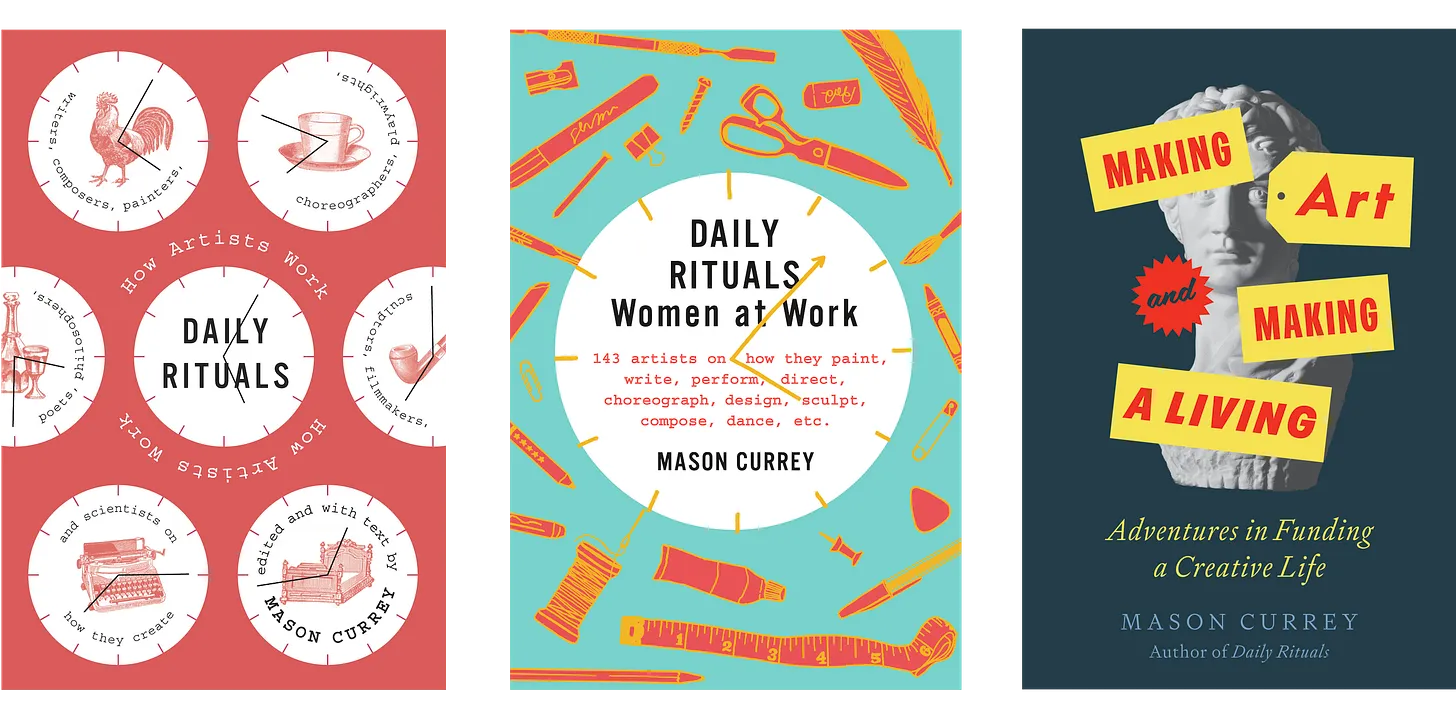
In my two Daily Rituals books, I focus on the everyday routines and habits that underlie great artistic careers. And in my latest, Making Art and Making a Living, I look at how a variety of brilliant minds funded those careers, whether through day jobs, patronage arrangements, mooching off family members, or other subtle and not-so-subtle financial maneuvers—which should be especially relevant to graduates wondering if they can afford to pursue a life in the arts.
Don’t take my word for it. Here’s a very kind endorsement from the psychology professor and bestselling author Angela Duckworth:
In my twenty years of university teaching, it has never ceased to amaze me how many young people harbor dreams of a creative life but assume they cannot both do what they want and earn what they need. Enter Mason Currey, a world-class obsessive who in this latest masterpiece invites us to walk alongside painters, poets, musicians, and others as they find their own unique ways to put food on the table and a roof over their heads while making their art. Exquisitely crafted, it’s a book I would recommend to anyone hoping to pursue a creative career despite the absence of a large trust fund.
All three of my books are available in very giftable hardcover editions from Amazon or Bookshop—or, even better, order them from your local bookstore.
Thanks for reading! This world-class obsessive (!) will be back with another issue in two weeks. In the meantime, if you’re in LA, please come see me read from my new book at Unreliable Narrators in Atwater Village this Sunday, May 24th, at 8pm.
That IS a great pep talk. But let’s talk about YOUR BOOK! It is so good, Mason! Every night before sleeping, I read several pages and am just so into it. I’m calling it a bedside thriller for artists. Carrying it around, showing it to friends, urging them to read it, for their own psyche. Surely you must be so proud of it. Try to savor that! Because truly it is a fantastic classic, alongside your Rituals books.
"Don’t worry about cool, make your own uncool." 🥲
One of my favorite artworks at the Phoenix Art Museum (I live 20 min away) is an installation by Sol Lewitt. I admittedly didn't know much about him before. This letter gives me newfound respect.
PS. The artwork is "Sphere Lit from the Top."