
How to move from doubt to confidence
Plus, novelist Sonia Feldman’s Subtle Maneuvers
Welcome to the 187th issue of Subtle Maneuvers. Last time, I shared a magnificent pep talk from the artist Sol LeWitt to the perpetually self-doubting sculptor Eva Hesse. This week: Some further thoughts on doubt inspired by a recent interview with the filmmaker Ira Sachs.
Sachs was talking about his 2025 film Peter Hujar’s Day, which dramatizes a 1974 conversation between the photographer Peter Hujar and the writer Linda Rosenkrantz in which Hujar describes in detail the events of one day in his life as a working artist. (It’s based on a wonderful book of the same title, which you can read more about here.)
Asked how he feels about the film now that it’s been out in the world for more than a year, Sachs said:
While promoting the film, I found it was unbelievably personal to me. I saw that the things that most troubled and interested Hujar were money and sustainability, and then, creatively, confidence and doubt. When you look at his images today, you don’t see the doubt. So for me, who was experiencing a lot of doubt on a new project, it was extremely comforting to know that he had, too. That’s what has stuck with me most intimately about this film: it’s a window into the circular nature of doubt and confidence in the act of creation.
That last line really struck me, because of course that’s right—all creative work proceeds through surges of doubt and confidence, and maybe the test of a successful practice is if it keeps you flowing from one state to the other, cyclically, and doesn’t let you get mired in either phase for too long.
I definitely tend to get mired in doubt. So I’m always looking for ways to jumpstart that transition into confidence. Sachs points toward one way: Looking to your artist heroes’ lives for comfort, validation, and inspiration. (This is what I hope to provide with this newsletter and my books, especially the new one!)
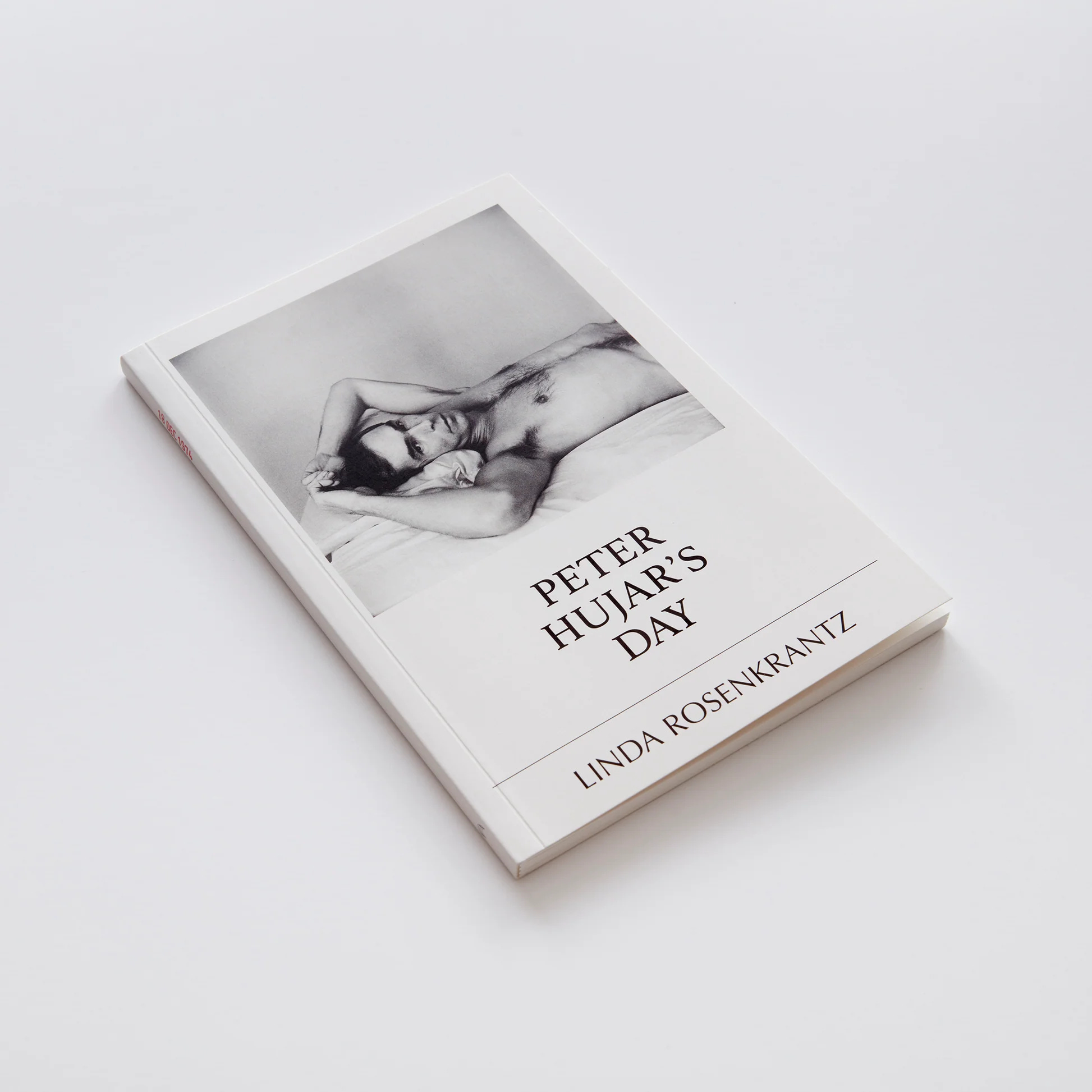
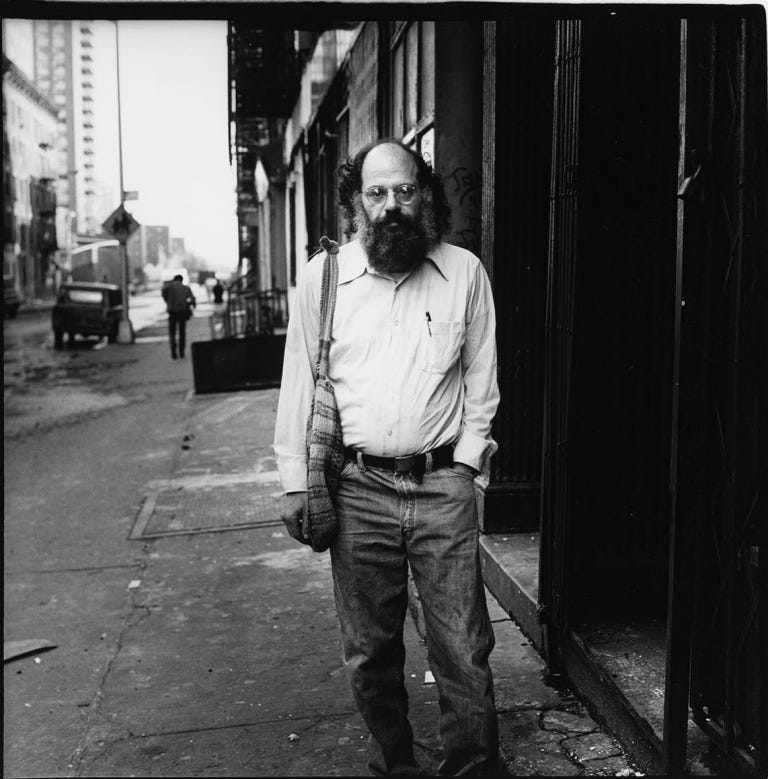
How did Peter Hujar navigate this dynamic? In the day he narrates to Rosenkrantz—December 18, 1974—he has been assigned by the New York Times to take a portrait of Allen Ginsberg. This proves to be something of a debacle: Ginsberg is suspicious and combative; he doesn’t trust the Times and barely consents to the portrait session.
Developing the film at the end of the day, Hujar at first thinks the results are bad. “There’s very little there,” he says. “There’s no contact.” He turns his attention to some other photos he needs to print—a series of restaurant interiors he did for money. Then he says:
And I thought they were good. But I realized to do good work, I really need time to look at it, really see what I’m doing. Sometimes I just stand there and stare at it and it’s even rather pleasurable. It really takes time to know it. It almost sounds corny.
Later he looks at the Ginsberg portraits again and thinks, “well, this is possible and it’s not uninteresting . . . there are one or two that really aren’t that bad.”
Is this what real confidence looks like? Not a surge of certainty but little darts of well, this is possible and it’s not uninteresting. Which sneak up on you in moments of absorption, when you stop thinking for a moment and just look.
SONIA FELDMAN’S SUBTLE MANEUVERS
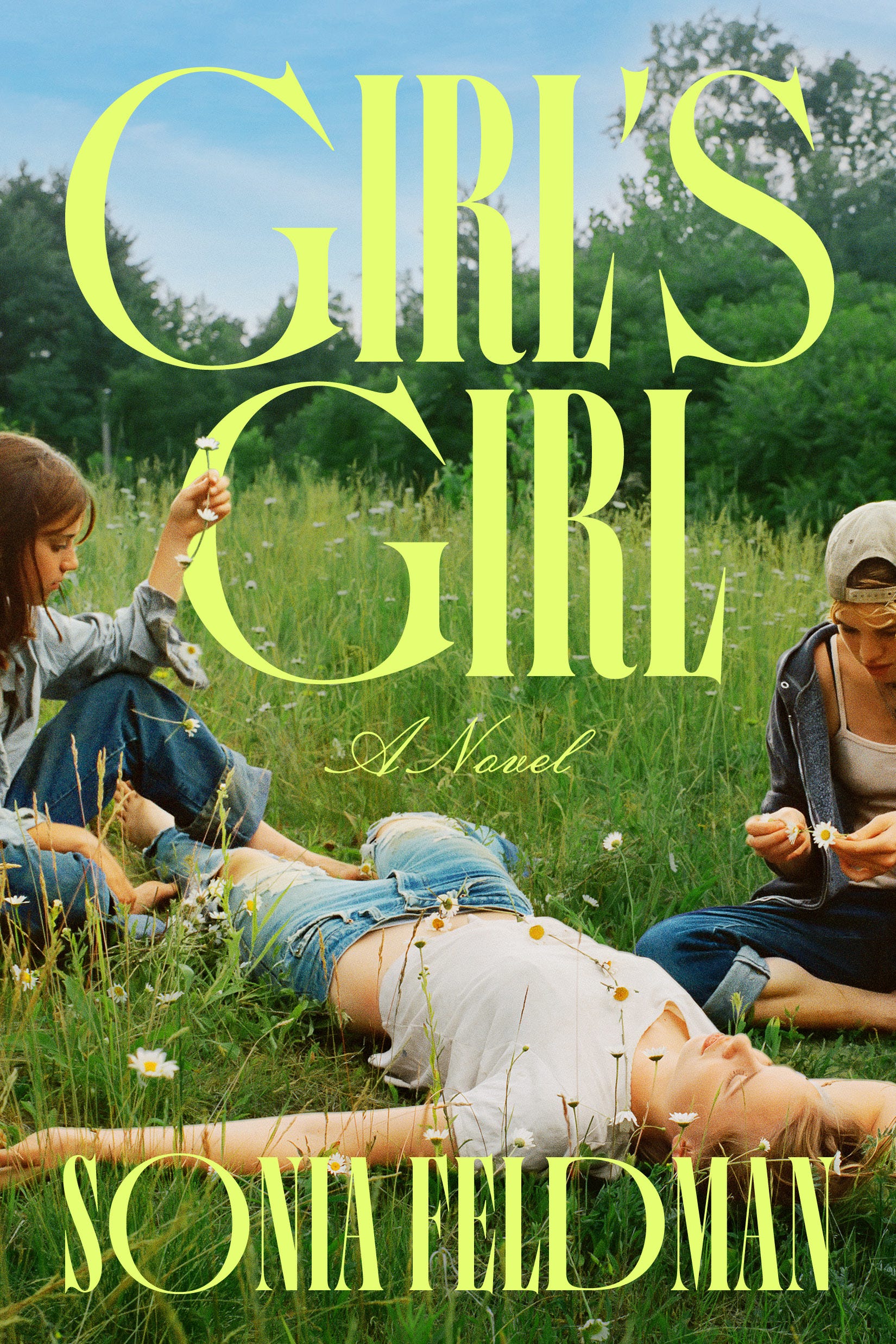
Today, I’m excited to launch a new column in which I ask some of my favorite writers and artists about the “subtle maneuvers” they relied on to finish a new project. First up: the Cleveland–based writer Sonia Feldman, whose newsletter Sonia’s Poem of the Week I’ve been a fan of for years. In addition to the newsletter, Sonia has been working for ten years on her debut novel—and it’s out today! Girl’s Girl is about “the pivotal summer that shatters the delicate balance between three best friends”; according to a glowing review in the New York Times, “Feldman brings an Austenian attentiveness to the foibles of suburban adolescence.”
Here, Sonia tells us how she got it done:
I started Girl’s Girl by writing a lot of miserable journal entries about why it was impossible to write a book. I would go to a café and spend two hours recording all my complaints. This was highly unpleasant but at least met the threshold of trying. Over time, my reasons became increasingly specific—why it was impossible to write this book, the one I wanted. I think this part of the process helped me define the negative space the novel would exist against. Slowly, a contour began to emerge of what I hoped the novel might become and could try to write towards. Or at least I felt like I knew all the ways I didn’t want to embarrass myself. Which is not the same as saying they could be avoided.
I revised Girl’s Girl the same way I revise poems. At the end of a draft, I would print out the full manuscript, mark it up, take notes. Then I would open a fresh, blank document on the computer. Every word from the old draft that I wanted to carry into the new draft, I had to type in by hand. No copy paste. This approach is part of why my book is so short. For the first few full drafts of the novel, somewhere between a third to half of the word count from the previous draft wouldn’t make the cut.
A benefit of this method is that it’s hard to retype lines you don’t like, thus forcing you to revise. But the real reason I kept doing this is that it was the only way I could find to keep myself present in the book. Otherwise, my mind would wander to thoughts that were about the book but not about the actual text in front of me.
I found it quite difficult to distinguish Girl’s Girl as it existed in my mind—a swirl of associated memories, emotions, influences, hopes and fears—from how the book existed on the page, the actual text that would be legible to a person other than myself. Manually rewriting every line kept me oriented. I used this method until quite far along in the revision process, and then I would just do it for sections or chapters as needed.
It was a labor-intensive approach. Writing a book is laborious and emotional. I found that, in order to keep going, I also needed it to be entertaining. I made deliberate decisions to include things that would give me pleasure to type and retype, like The Sims and Sailor Moon and a pornographic, lilac-haired fairy named Ginevra. I like when art is both finely made and delightful.
Sonia’s process reminds me of Oliver Burkeman’s revision method, which similarly involves printing and retyping entire drafts into a blank doc. (I do this sometimes, too!) To see how it all came together in Sonia’s case, please join me in ordering Girl’s Girl.
WORM ZOOM: THE NEXT PHASE
In case you missed my announcement: After two years and more than 450 mornings of hosting Worm Zoom, my virtual coworking club, I’ve decided to shift the schedule going forward:
The every-weekday Worm Zoom will continue until Friday, June 19th. If you’ve been meaning to check out the coworking group for the first time, or you’re a past participant who has been thinking of returning, I hope you will join us for these final few weeks! I post the Zoom link every day here.
After that, I will continue hosting Worm Zoom for the first full week of each month, Monday–Friday, at the same time as always: 6–8am Pacific / 9–11am Eastern / 2–4pm UK time. This means we’ll meet July 6th–10th and August 3rd–7th.
On the last Friday of each Worm Zoom week, we will have our Worm Salon, an opportunity to chat at greater length about what we’re all working on, what challenges we’re facing, and what breakthroughs we’ve experienced, too, hopefully.
The tracking spreadsheet will continue to be available for publicly logging our daily goals and accomplishments, even on the days when we’re not meeting on Zoom. And the group chat is also available as a way to stay in touch with each other and share updates and progress reports as we keep worming along on our projects.
For anyone who has been meaning to buckle down on a creative project and could use an extra dose of focus, energy, and resolve—this is your sign! Please join us for the final few weeks of daily Worm Zoom sessions from now until June 19th:
FOR THE CLASS OF 2026
If you need a graduation gift for any aspiring writers, artists, or musicians in your life, may I humbly suggest my new book? It’s my attempt at writing the book I wish I had had at twenty-two: an in-depth look at how the heck anyone ever afforded to build a creative life, with stories of day jobs, patronage arrangements, mooching off family members, get-rich-quick schemes, and other subtle and not-so-subtle artistic-financial maneuvers.
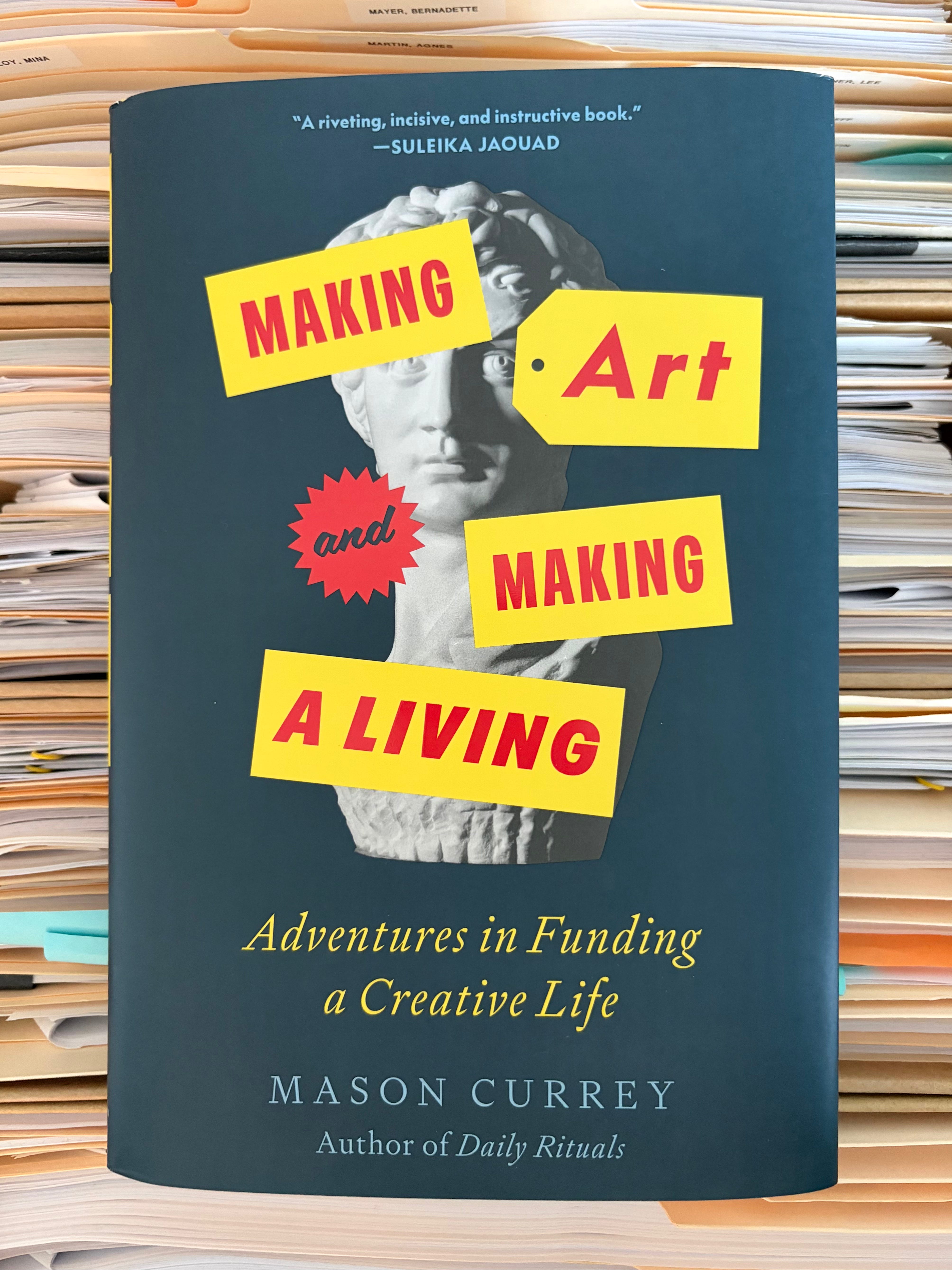
Obviously, I’m biased. Here’s a very kind endorsement from the psychology professor and bestselling author Angela Duckworth:
In my twenty years of university teaching, it has never ceased to amaze me how many young people harbor dreams of a creative life but assume they cannot both do what they want and earn what they need. Enter Mason Currey, a world-class obsessive who in this latest masterpiece invites us to walk alongside painters, poets, musicians, and others as they find their own unique ways to put food on the table and a roof over their heads while making their art. Exquisitely crafted, it’s a book I would recommend to anyone hoping to pursue a creative career despite the absence of a large trust fund.
RELATED ISSUES
From the archive:


Thanks for reading! This newsletter comes out every other Tuesday—and you can help keep it coming by upgrading to a paid subscription, buying one of my three books, forwarding this email to a friend, or even just clicking the like button below. 🙏
Thank you for all these new books I need to read: your newest (just finished the daily rituals one), the Peter Hujar one (where can i watch the film do you know?), and Sonia Feldman's. I only vaguely knew of Peter Hujar but he seems so fascinating.
I also love Sonia's newsletter so much, delighted to see her here! cannot wait to read the book!